
The Alexandra Lifeboat: Timaru's Pioneering Maritime Rescue Legacy (1863–1885)
New Zealand's first professional rescue service – debunking myths, celebrating heroes, and revealing a story of courage and innovation.
The Truth in Numbers
- 22+ Years Active
(1863–1885, with legacy to 1913) - 150+ Lives Saved
(integrated lifeboat + rocket system) - 38 Documented Activities
(no "13-year dormancy") - One of Only 3 Surviving
Self-Righting Lifeboats Worldwide

A Pioneer, Not a "Death Trap"
For over 140 years, myths have obscured the remarkable story of the Alexandra – New Zealand's first professional rescue lifeboat. Dismissed as a "death trap" and claimed to have been abandoned for 13 years, the evidence reveals a pioneering vessel using the best 1860s technology, active for 22 years, and integral to a rescue system that saved over 150 lives.
Myths debunked:
- "Death Trap": RNLI-spec self-righting design proved itself on Black Sunday (4 capsizes, 4 self-rightings).
- "13-Year Dormancy": 38 documented activities during the supposed gap.
- "43 Lives Saved on Black Sunday": 43 medals awarded to rescuers; 24 pulled from water, most reboarded ships.
Essential Timeline: Timaru Maritime Rescue Services (1860–1890)
Key events highlighting the Alexandra Lifeboat and Rocket Brigade operations.
- 1863: Alexandra arrives and is christened – NZ's first professional RNLI-spec lifeboat.
- 1867: Boxer rocket apparatus arrives in Timaru.
- 1869: First major rocket rescues (Collingwood, Layard); James Balfour dies attempting to board SS Maori.
- 1870: Alexandra rescues Aurora crew; Rocket Brigade saves Layard in 9.5 minutes.
- 1875: Princess Alice wreck catalyzes permanent harbour demands.
- 1877: Timaru Harbour Board formed; Rocket Brigade formalized as volunteers.
- 1878: Harbour construction begins on southern breakwater.
- 14 May 1882: Black Sunday – Benvenue and City of Perth wrecked; heroic rescues amid tragedy.
- 1885: Alexandra disbanded as harbour progresses.
- 1886–1890: Harbour completed; wreck-free era begins.
- 2025: Alexandra returns to new purpose-built shelter on Caroline Bay.
The Complete Story in Three Acts
Act I: The Pioneer (1863–1870)
New Zealand's first professional rescue service. Self-righting and self-bailing technology. Early successes: Prince Consort (1866), SS Maori (1869), Aurora (1870 – all 4 crew saved). Rocket apparatus integrated from 1867.

Act II: Trial by Fire (1870–1882)
28 ships wrecked in exposed roadstead. Princess Alice incidents, Rocket Brigade saves 100+ lives. Black Sunday (14 May 1882): Fatal salvage phase (5 drowned), heroic rescue phase (Alexandra capsizes 4 times but self-rights; 25 pulled from water, 24 landed safely).

Act III: Triumph (1878–1890)
Harbour construction accelerated post-Black Sunday. Based on Balfour's 1869 data. Breakwaters complete; no wrecks after 1886. Integrated system (lifeboat + rockets) saves 150+ lives.
The Core Elements

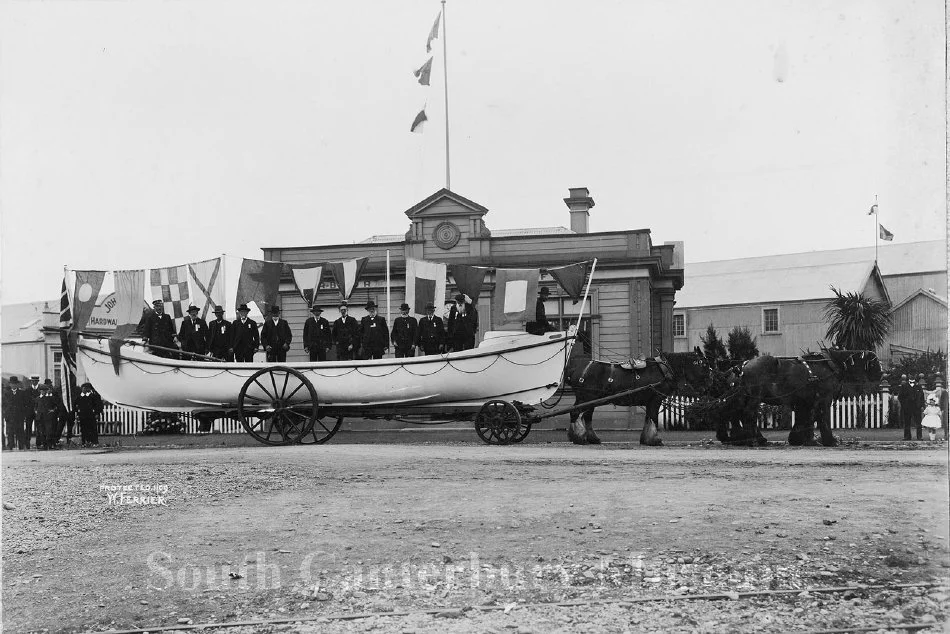
The Alexandra Lifeboat
RNLI-spec, 33ft self-righting, saved 50+ directly. One of three surviving worldwide.

Black Sunday: 14 May 1882
Heroic rescues amid catastrophe; vindicated the lifeboat's design.

The Rocket Brigade
Shore-based system; notable rescues including Collingwood, Princess Alice; saved 100+ lives.
The People Behind the Rescues
Captain Alexander Mills – Timaru's Greatest Maritime Hero (1868–1882)
Commanded both lifeboat and Rocket Brigade; Harbourmaster, Lighthouse Keeper, Pilot. Died of exhaustion on Black Sunday after heroic efforts.

James Balfour (1831–1869)
Pioneering engineer; designed lighthouses, experimental groin at Timaru; died boarding SS Maori.
The Volunteers & Community
Professional boatmen and young volunteers; many sacrifices, especially on Black Sunday.
Wider Context: Harbour Development & Challenges
From open beach roadstead (1839–1890) to protected harbour. Economic pressures, political battles, human factors in disasters all shaped the era.
Explore more: Interactive Timelines – Rescue Services (1860–1890) | Maritime Incidents (1842–1964)

The Alexandra Returns to Caroline Bay – 2025
Thanks to Timaru Host Lions Club and community fundraising, the restored Alexandra now has a purpose-built shelter for future generations.

Start Exploring
Visit Caroline Bay to see the Alexandra, explore South Canterbury Museum exhibits, or dive deeper into Timaru's maritime history. For researchers and myth-busters: timelines and databases available.